The Truth about Mom Burnout…the whole Story

Mom burnout is a term that has been gaining traction in the past several months and years, particularly as more and more research is coming out about the high incidence of parental burnout in the wake of the COVID-19 pandemic.  The impact of months and months of isolation, managing schooling at home, trying to care for homes, children and careers, all without the usual support structures has left parents, and moms in particular, exhausted, overwhelmed and deeply stressed out.  But if we’re honest, many of us were feeling burnout long before lockdowns and curfews and restrictions.  The way our societies and culture have set up families to exist as little islands, juggling everything alone is a recipe that is set up to create burnout.  And so it should come as no surprise that some 66% of working parents meet the criteria for burnout.*

And this is my story too.  If I’m honest, I was already feeling spent in 2018 after a difficult pregnancy, a newborn, a financial crisis at work, a husband in the final throws of his 5 year registrarship and trying to make it through his exams, helping out my chronically ill parents and spending time with my then 3 year old who has sensory processing difficulties that made typical milestones (like potty training and eating) a stressful journey.  And then, lockdown happened.  Suddenly I was plunged into a world of trying to work all night after caring for my children all day.  I was trying to do preschool at home, keep the house in a semblance of organization and solo parent while my husband continued to work in the hospital.  It was brutal. And by the time October rolled around and I was able to have more consistent childcare that allowed me to return to the office, I was utterly finished and neither the employee, nor the partner or mother I wanted to be.

But just what are the symptoms you should be looking out for when it comes to parental burnout?  The list that follows are the most common symptoms and can start to help you see whether you might perhaps also be experiencing mom burnout:

  • Withdrawing from things you used to enjoy doing
  • Struggling to stay or fall asleep
  • Avoidance of people and things you once loved
  • Changes in appetite
  • Feeling exhausted and having no energy
  • Feeling emotional including anxious, stressed, depressed or angry
  • Increased irritability with those around you
  • Feeling hopeless
  • Feeling like any new task will put you over the edge
  • Feeling resentful of others, particularly your partner
  • Feeling touched out and needing to be alone
  • Waking up and not wanting the day to start
  • Having difficulties controlling your worries and thoughts

These symptoms are all too common in my mom friend circles.  I’m sure they are in yours too.  However, these checklists are never comprehensive, and we would strongly encourage you to speak to your health care professional if you feel unable to cope, and to make sure there isn’t an underlying condition complicating your feelings of burnout.  But talking about the symptoms (or baring them in silence) will only get you so far.  I knew I had to seriously work on getting myself better, especially in light of our upcoming international move which would see me home with the kids permanently. My journey back to myself has been slow going, taking two steps forward and one step back. Truthfully, it’s taken more than a year to feel like I have found myself again, and it’s taken more than self-care to do it. And that’s what we need to talk about more.

So just what does it take to move past burnout and into living and even thriving again?  The thing that helped me the most, was being vulnerable.  To continue to speak up and admit I couldn’t do it all, to ask for help without always giving a reason (excuse) about why I needed it, to learn to say no more often and do less, even if all I would do was rest, to work on my own perceptions of myself and motherhood and realize I am enough, with all my flaws, and to learn to let some things go.  It’s not an easy journey, but at the end of it, I feel like I’ve gained more than I lost, which is perhaps the point of any journey no matter how arduous.  And just perhaps, my story can help another mom find what she needs to start her own journey of moving past burnout.  Because at the end of the day, we’re all in this together.

*Pandemic Parenting:  Examining the Epidemic of Working Parental Burnout and Strategies to help – Ohio State University, May 2022, https://wellness.osu.edu/sites/default/files/documents/2022/05/OCWO_ParentalBurnout_3674200_Report_FINAL.pdf

Written by Robyn Jacobs

Time Management for the Busy Working Mom:       

So it is 20:57 and I am sitting down to a quiet home after having a frantic day! My normal day starts at about 4am when my one year old who sleeps in a cot in our bedroom wakes up, I stumble over my slippers to fetch her and cuddle her in bed knowing I probably have another 90 minutes of rest. But this 90 minutes is her foot in my back, rubbing of my hair and tossing around. I don’t care because I just need my eyes to not be open. Now it’s 05:30 – my alarm goes off. I press snooze. 06:05 I hear my two boys shouting at each other over Lego and suddenly my bedroom door is opened with a bang thanks to my needy dog who loves to wake us up. It’s go time. COFFEE. I need it, I desperately need it. My husband takes the kids to the kitchen as I make my way towards the light of the hallway. Husband hands me a warm cup of coffee while my kids are fighting over who is stronger, Luke Skywalker or Darth Vader (we are Star Wars obsessed at the moment!) My 1 year old now can’t walk and needs to be carried to breakfast. Ok, caffeine hits and all of a sudden it’s 06:45. Time to get going. Check lunches are packed, kids brushed their teeth, washed their face, and dressed appropriately. Shoes on, homework and library book in the school bags. I am dressed, my lunch packed and we out of the door but wait, there is a tantrum, or a bribe that needs to be made just to get one of the kids into the car so we can start the day.

Drop the kids off and then there are emails that need responding, meetings to be had, strategic vision and planning to be implemented, people to manage, financial crises to handle and in-between making sure the kids are okay, did I check in with the husband about how he is doing, checking if I made that doctors appointment, then before you know it is school pick up, homework, play time, supper time, bedtime, and whatever-is-left time.

It is no wonder that they say, being a working moms is the equivalent of working 2.5 jobs in a recent study. Welsch (2018) states that working moms work about 98 hours a week. Well, that explains the bags under my eyes. But seriously, being a working mom is incredibly hard particularly when you feel like you not doing anything to the best of your ability and then you carry guilt around which, let’s face it, makes you feel like a failure, overwhelmed, lonely and sometimes depressed. Trying to juggle it all may feel impossible sometimes. I know. And it is okay to feel like that because it is A LOT.

With all of these balls in the air, what I found helpful is ensuring that you have a handle on time management. Being able to be good with your time helps you feel less overwhelmed and have a bit more in control of the day that is ahead of you. So I’m going to share with you the most effective tips that I find for time management:

  1. Routine, Routine, Routine: this saves my mental energy and reduces stress. This doesn’t just include bedtime and morning routines but also meal prep, chores, check-ups etc. Instead of asking “What are we having for dinner?” or “When last did we clean out the freezer?” Routine helps to free up time and help you focus.
  2. Prioritise: This means knowing what to say no too. I work in 3 zones – urgent, important & delay. This helps me know what needs to be done right away, what needs to get done the same day and what can be moved over. Remember we only have 24 hours in a day and 8 of them is for sleep. We can’t get everything done, but we can get the things we need to.
  3. Delegate: Don’t carry the load yourself, ask for help, give tasks to those in your office and those in your home. Lean on your support system. When we got covid, my mother was a lifesaver – food was dropped, medicine was ordered, activity packs were bought. Part of delegating is outsourcing – since covid I have done most of my grocery shopping online, while in meetings. I have outsourced my daily home cleaning & gardening services. I can’t lie, coming home to a clean house just makes me feel relaxed automatically.
  4. Time block: I give time to tasks rather than an endless to-do list. For example, 9am to 10am: I respond to emails; 11am to 1pm is scheduled meetings, 4pm to 5pm, I am preparing supper etc. This helps me stay focused and get the task done rather than guessing
  5. Being flexible: Though routine is important, it’s important to keep things flexible enough to accommodate the unexpected things that moms encounter like sick kids, deadlines popping up, and the occasional meltdown. Having a time cushion and some backup plans can take the stress out of the unexpected, and keep one schedule hiccup from throwing off your whole day (or week).
  6. Self-Care: it’s easy for us, as working moms to prioritise the kids, partner, work, household chores and so much more, but it is never easy to prioritise ourselves which can lead to us feeling overwhelmed, stressed and anxious. When we’re tired or have binged on junk food, we’re often less productive and organized, and this lack of clarity can translate into more time wasted throughout the day and less time available to get everything done that needs doing. So get quality sleep, eat a healthy diet, and follow other self-care strategies for mothers, and you’ll be operating at your best — and be less stressed.

These are a few of tips for making our busy lives much easier so that we can nurture our mental health, find a good work-life balance so that we can enjoy our work and family life and just ditch the guilt. Our goal as Working Moms Thrive is to ensure that we are not just coaxing through life-merely surviving but that we also thrive- reach our full potential and make most of the opportunities that life has for us.

If you haven’t downloaded our Self-Care E-Book do so today-it is a great way making sure that you are making time for yourself in your busy schedule.

Written by Danielle

Working mom myths you need to overcome to thrive

Being a working mom is hard enough without all the other judgment and guilt – from others and ourselves.  But like a lot of things with parenting, it’s not the actual time and effort that we put into integrating the different parts of our lives that is so hard; it’s the almost constant barrage of stereotypes and misconceptions we have to face as working moms.  And these are dangerous – as they are part of the societal structures that hold women back.

So let’s talk a little about a few of the myths we encounter as working moms and how to overcome them…

  1. A working mom cannot dedicate much time to her family.

This myth hurts because it hits at the core of our often strongly held guilt about working and mothering.  And yet, it just isn’t true.  Working moms may not be there as much as others in quantity, but it’s well documented that we prioritize quality time with our families.  We know the importance of being present when we are with our kids and we work on switching off to make this happen. If guilt and shame is something you struggle with, you might be interested in our free 5-day email course about working through our guilt and shame as working moms.

2. Working moms are not reliable.

This fallacy is often the root cause of why some employers are reluctant to take on working moms. There is the assumption that she is going to be late, distracted and unproductive a lot of the time, and probably need lots of time off. And yet, unreliability is NOT a characteristic I see in many working moms.  The constant need to juggle various schedules, calendars, and priorities means working moms are experts at reliably getting the job done.  And yes, we may need more flexibility (kids get sick, cars break down and people need us) but that doesn’t mean our performance is affected.  In fact, research shows that flexible work places actually have increased levels of productivity and efficiency from it’s workers.  This might be one you have to tackle head on, when you see it.  Speak up about your needs, but also about your skills and your well-honed abilities in taking care of literally everything.

3. Mothers work in order to avoid housework.

This is just a ridiculous assertion!  Housework needs to be done regardless of whether you work or not; and most working moms continue to carry the double shift of having to work all day and then run the household once home.  Even those working moms who have help in the home while they work are often still responsible for the daily organizing and running of the household, shopping, washing and cooking.  Don’t even waste your time trying to justify this one – every mom knows just how hard you work!

4. Working moms ridicule stay at home moms.

Ever wonder why the world is so intent on pitting moms against moms?  This myth feeds right into that societal stereotype. And yes, the world of parenting is certainly filled with it’s fair share of judgment, on all sorts of topics, but really underneath it all is our fear that we are failing and that by choosing something other than what I’ve chosen it somehow says I’m wrong.  Parenting is hard, whether we work or whether we stay at home. We are all just trying to do the best we can for ourselves and our families.  Some of us choose to work, others to stay at home.  Some of us work and wish we could be at home and others are at home and wish we could be at work. And whether we are a working mom or a stay at home mom, we all love our kids, are doing our best and have good days and bad days.  So let’s just offer up the support we all need to each other, instead of trying to pit ourselves against each other. 

5. Working moms are miserable.

If you’ve been following us on Instagram, you know that this is not true.  Research has shown that working moms are typically happier than those of us who stay home.  And the reasons for this are many.  The opportunities afforded to working moms to use their strengths and skills, develop their interests and social circles and provide for their families can often be seen as fulfilling and meaningful.  And if working moms are unhappy, perhaps its got to do more with a society that doesn’t see their uniqueness, value their contributions and help them balance all the parts of their lives.

Because balancing the roles we play (or integrating them into a fulfilling life) is hard work.  There are ups and downs.  But that job doesn’t need to be made harder because of the judgement of those around us and our culture at large.  It’s high time we stop pitting moms against each other and just offer support.  We need to value the contribution working moms are making at home and at the office.  We need to value ourselves.  After all, moms (working and stay at home) are raising the next generation.  Shouldn’t we be doing everything we can to ensure we have all we need to do this well?

If you’d like some ideas about how to build self-care into your busy life so that you can tackle these myths head on, sign up here to get our free self-care guide.

Written by Robyn Jacobs

Finding your purpose – what does that mean?

As I studied psychology at varsity, many moons ago, I was taught many different theories of human development. Seated on my bed, textbooks spread out, I found myself drawn to the theories of one particular man – Victor Frankl. Frankl believed that humans are motivated by the desire to find meaning in life, and that motivation for living comes from finding this purpose.  This idea intrigued me, as a young women, trying to figure out her own place in this world. And I find I think of it often, particularly at junctures in my life where my meaning or purpose is shifting – like recently where I went from a mom working outside the home to much more of a full time stay at home mom with a bit of a side hustle and a few hours a week working from home…

But just what is purpose and how do we find it?  Entire libraries have been written on this topic, which says to me there is no one definitive answer.  What is purpose and meaning for you may well not be what it is to me, and yet we are all on this path of trying to find meaning in our lives.  

What is true though is that recent research clearly shows four factors play a key role in promoting meaning or purpose in our lives.  These are:

  • Physical and mental well-being, including mental resilience and stress reduction strategies.
  • Belonging and recognition or feeling part of something bigger than yourself and feeling valued and validated for this.
  • Personally important activities, or things we treasure such as hobbies, family, friends and even work.
  • Spiritual closeness and connectedness, which may include religion but can also be found in seeing that things in this world are all interrelated.

This is one of the reasons we have built Working Moms Thrive on the pillar of purpose.  Finding our purpose or meaning in being both workers and moms is vitally important to our mental well-being and happiness.  We believe that focussing on each of these five pillars will help you thrive – in all your roles.

But just how do you find purpose at work?

This is a question many of us have had over the time of this pandemic.  There is nothing like a world altering virus to make you think about what you are doing with your life!  Yet what is very clear is that for most of us, finding purpose isn’t necessarily easy.  It requires time and a willingness to figure out what makes us tick.  This self-awareness is a process of discovery.  There are, however, a few points that can help you start on this path…

  1. Ask yourself what has changed – figuring out and addressing the root cause of your feelings of meaningless at work is the first step.  Is it ongoing stress?  Diminished productivity? Tension with colleagues?  Have your usual avenues for dealing with work stress been changed by the current restrictions? Know what is the problem can help you start to figure out the best solution.
  2. Offset this negativity with finding moments of things that bring you joy – if work or life has lost its appeal – at least for now, try to think of things that might sparkle just a little.  Where can you find moments of joy and meaning?  Take a walk, concentrate on being mindful as you drink your tea, read a book, page through a magazine. Savouring these small moments is one way to start on the path to finding meaning.  
  3. Be kind – our current situation has taken a toll on our physical, emotional and mental well-being; and it’s hard to find meaning when we’re running on empty. But this is true for everyone around us and it’s helpful to remember that.  Let’s be kind to ourselves and to each other.  One way to start is to focus on gratitude practices – reminding ourselves that we are connected to something bigger than ourselves and that we are not alone.  Check out our link.tree for resources that might help you with this…
  4. Reflect on your values and your goals – what motivates you?  What do you care about? How are you spending your time and using your abilities?  All of these things will help you figure out more of your purpose. Then look at work. What drives you?  What contributions do you want to make? How does the work you do impact other people? What first excited you about your job? Answering these questions can help re-ignite your passion and help you find meaning in your daily tasks.
  5. Offer your help – being helpful is gratifying and is a small way to increase your personal sense of purpose. Look for ways to make new contributions to your job which you would find meaningful.  Think about how your newly audited skills, knowledge and strengths might help your workplace in a time of difficulty. If your job is not offering you much meaning, seeking out ways to help others through mentoring, coaching, volunteering or getting involved in outside organizations is another way to find personal meaning.  This also builds relationships and a sense of interconnectedness which is vital to finding meaning and satisfaction in what we do.

Just why is finding meaning in your work important?

We are hard wired to seek connection and find meaning in even the worst of circumstances and a sense of purpose or finding meaning in the work we do (regardless of what that is) ultimately increases our job satisfaction, overall happiness and sense of well-being.  So it’s important. And so we can use this knowledge and the points above to seek meaning.  Which is needed now more than ever.

Written by Robyn Jacobs

How to cope and thrive with anxiety in the workplace

This year is officially my worst year in terms of stress, anxiety & just one curve-ball after the other. Starting this year off with a passing of a dear friend to covid, then navigating a work culture that is resistant to change, financial pressures, some family drama and a car accident on top of it all. But despite all of that I have found joy, purpose and what matters most to me.

One of the biggest factors for me is my faith. I cling onto the hope of Jesus that through my struggles and chaos He is there for me. He might not make it better in the way that I would hope and, in fact, some times He says no, but my relationship with Him has given me a sense of purpose and hope to get through the bad times.

I have realized that when work is very challenging (and we all have seasons of this, be it restructuring, meeting deadlines or targets, or financial pressures at work) it doesn’t just stay at work. We carry these anxieties with us back home and into our relationships, which leaves us snappy, resentful and introverted. This doesn’t make us pleasant people to be around and then what inevitably happens is that we start feeling guilt and shame around not being a good enough wife, friend and mom.

We all feel anxiety, particularly if you working in a toxic work environment (I have experienced this before where you counting down the minutes till 4:30pm). Anxiety can affect performance at work, the quality of the work, relationships with colleagues, and relationships with supervisors. And if you have a diagnosed anxiety disorder, then these challenges may prove even more difficult. The worst part of anxiety is when there is conflict amongst your colleagues or with a manager. Some people love the drama and some people want to hide under their desks until everything passes – and working from home where you don’t see your colleagues’ face-to-face means texts, emails and zoom meetings, which does not help the anxiety either. And let’s not mention Covid-19 & protocols in the workplace and so much more.

So how exactly does one thrive then when you have anxiety? Well, here are 10 tips on how to you can cope with anxiety at work and thrive:

  1. First, build a personal wellness plan that works for you. Here you focus on sleep, exercise, eating healthily, engaging in social activities that brings you energy and can help reduce anxiety and stress. For me, I love being around my closest friends where we don’t talk about work.
  2. Ask for help at work or delegate. This is a big one. Remember you can’t do everything particularly if deadlines are tight. Who can you bring onboard, who you trust to help get the job done?
  3. Avoid getting involved with conflict. It is so easy for us to get sucked into the office gossip, or take sides without knowing the full picture. Gossiping may seem like you are just venting or offloading but this can easily cause more tension between colleagues and stress. Though this is tempting, try to either stay out of it or sort out the conflict as soon as you can. If you need to get a manager involved, follow HR protocols.
  4. Try and set realistic deadlines and/or targets. Now I know not every deadline is negotiable but for those projects that are, be realistic and stick to those timelines. This can greatly reduce anxiety. A tool I have used to keep me on track is Trello. It is a great way to assign tasks to individuals and the best part is seeing how far you are on a particular project.
  5. Find colleagues in your workplace that you trust and can support you. This will help you feel less alone. I know in particular that my work besties have helped me get through the toughest times at work and made the challenging days much more bearable and keep me accountable when I need it.
  6. Remember your boundaries. We spoke a lot about this last month but it is so important that when you are feeling overwhelmed and anxiety is increasing you need to say no to a few things. Be honest with your manager and colleagues of where you are at. Do you have to go to every meeting? Can things be postponed? It’s very easy to think that everything is priority or urgent but you need to be able to streamline what you can achieve for that day, week or month.
  7. Remember your worth! This is a toughie particularly for us women, but is some of our anxiety asking for a higher salary because we are either struggling financially or feeling undervalued for our skills in the workplace? I have learnt over the years and more so recently that though we can love our job, we also need to be compensated for our time and skills that we bring to the table. Go to your manager and speak about a salary increase or if there are any opportunities to grow within the company ask and go for it.
  8. Use your leave! Now those who know me will say, “yes, Dani, use your leave” but I have learnt particularly this year that your leave is there for you to take care of you and spend time with your family. When you use it wisely you can come out of it well rested rather than burning out by the end of the year.
  9. Schedule breaks into your daily routine. Sitting at your computer all day means it is very easy to start procrastinating but rather get up from your desk, make yourself a cup of tea and then go back to your task. If you are working from home, change your working environment, go work at a coffee shop or work at a friends place. This will decrease the feelings of loneliness and your anxiety.
  10. If your anxiety is not decreasing after trying all the above, go access the resources available in your workplace. Going to see a mental health professional can be just what you need to get things off your heart in a safe place with no judgement. I know both Robyn and I, as mental health professionals ourselves, always walk away from a therapy session feeling so much better. It is also a chance to see if there are underlying conditions as well.

Anxiety will always be present to some degree in your daily life, but it doesn’t have to interfere with your work performance and enjoying your profession. Though anxiety is an unpleasant emotion, it’s also an opportunity for you to grow in your career. If you implement some of these tips above it may help you to cope in those challenging seasons, grow you and allow you to find purpose in your career.

Written by Dani Moosajie

Working moms, can we really have it all?

I remember sitting in my feminist psychology lectures in third year and my lecturer (a beautiful, strong woman) loudly stated that women can have it all – family, career, marriage, friends, but that it will come at a cost. I remember being surprised by this statement. I grew up in an all-women household, and went to an all-girl school and was constantly told we could have it all. So what did she really mean? Surely women don’t have to choose still between career and motherhood in the 21st century?


As the years have gone by, starting my career, getting married, having children and all that life throws at you, that statement resonates with me more and more – “You can have it all but it comes at a cost.” I have encountered challenges as I navigated tertiary education, receiving 3 degrees; entered the workplace where micro-aggressions have hit me and where I’ve had to deal with racism, stereotypes, the huge pay gap between men & women (particularly women of colour) and unwanted male attention. And after getting married, having kids and still choosing to work, I have encountered additional challenges too. I have been exhausted, I have suffered from burnout and I have had so much self-doubt, which I still struggle with today.


The reality is that entering the workplace as a woman before I was married and had kids was tough, but being a working mom has been a hard-hitting reality which has left me asking, do I want to have it all? I love my job (I really do!), I love my family and I will do anything for my kids…but the problem is that working moms are doing so much more than working and looking after their kids. The mental load of a working mom is pure exhaustion – work projects due, managing teams, dealing with challenging working environments, sick kids, home chores, grocery shopping, doctors appointments, school assignments, making sure your kids are making their developmental milestones and so on.


Trying to have it all and fitting into everyone else’s expectations of what your life needs to be puts more pressure on ourselves than it needs to be. Do we need to be top of our game at work? Do our kids need the homemade cupcakes for their birthdays? Or the Pinterest birthday parties, home décor, big house, the fancy car or clothes. Is our purpose in life to have it all? Do all of these things really bring you happiness?


As I reflect on my lecturer’s statement, I have been asking myself what cost am I willing to pay to have it all. Maybe the costs means that we don’t need to have it all at one time. This is because at different seasons of our lives our priorities shift and different aspects of our lives are going to have to take a backseat at times. For example, maybe when our kids are little we want to take a slower path in our career and slowly build on it as our kids get older and need us less. Or maybe we want to pursue our career right now because of the opportunities available to us and save money so that as they get older we can lessen our work load.


Many have decided a 9-to-5 job is not an option while having kids and decided to start their own business. This is still hard work but comes with the flexibility of being there when our children need it most. Others have approached this and decided to work part-time so they can work while their kids are at school and then be at home when the kids are at home.


Whatever choice we make, we need to understand deeply what makes us happy, what helps our relationships that we are in (in our marriages, with our children, extended family and friends) and what are the costs we will inevitably have to pay so that we can pursue our own dreams and not those of someone else.


I have found what makes me content is to strive for happiness, not perfection. I have reset my expectations and have found that my timeline, my life choices make sense for me and my family; and I don’t need to explain that to anyone else. So perhaps as working moms we need to reflect on the following:

  1. What are your values and what are your priorities?
  2. What can you do to lessen your mental load as a working mom? How can you reduce stress?
  3. Can you recognise when you are feeling overwhelmed or struggling with anxiety? How are you taking care of yourself?
  4. What boundaries are you putting in place so that you can spend time where you want to?
  5. How can you shift your perspective from work-life balance to work-life integration?

So instead of trying to have it all, ask yourself what makes you happy? What do you value? What compromises or sacrifices are you willing to make? Maybe there is freedom in not ‘having it all’ and choosing a life that makes you happy.

Written by Dani

The benefits of setting healthy boundaries.

I am not a procrastinator by nature – unless something causes me anxiety.  Then my default coping mechanism is avoidance.  This is probably way it’s taken me 4 days to sit down and write this post.  Boundaries… Something we’ve spend quite a bit of time talking about this month, but not something that has necessarily come easy to me.  Setting healthy boundaries in a respectful way is something I’ve had to learn.  And to be honest, it’s something I still have to work at.  Intellectually I know why it’s important and healthy.  I even know how to do it.  And yet I can get caught up in my own web of people pleasing and self-doubt which sabotages any effort I want to make.  Is it just me?

So what is a mom to do?  Well, I can tell you what works for me.  When I’m struggling to state and follow through on my boundaries, I try to remind myself of what happens when I don’t set them (I get resentful and even rage-filled) and of the benefits of setting boundaries.  I also practice some positive self-talk, deep breathing and then send a text or a phone call which sets up a conversation I can’t easily back out of.

But just what are the benefits of setting healthy boundaries?  I have found listing them for myself really helps give me the impetus to put boundary setting in to practice…

  • It helps build our self-esteem – setting healthy boundaries helps us to put ourselves first and in doing so it can boost the way we see ourselves and the value we hold in our own self-worth. 
  • It has enormous benefits to our mental and emotional health – when we set healthy boundaries we decrease our stress and anxiety, feel less resentment and rage, and increase our feelings of peace and safety.
  • It helps develop my self-awareness – boundary setting means I need to get clear on who I am, what I want, my beliefs and value systems.  Recognizing that I’m feeling resentful or angry because a boundary has been crossed, helps me to then recognize what that value in my life is and how to make sure people are more aware of my needs.
  • It helps me avoid burnout – such a vitally important thing as a working mom, where overwhelm and burnout are all to prevalent.  By knowing myself and my limits, I can communicate these and put measures in place to ensure I don’t become overwhelmed, stressed out and fatigued.  It also means we are able to be more compassionate as we have the mental and emotional space to be there for people.
  • It brings a greater sense of identity and focus on my own well-being.  Setting healthy boundaries helps us to know ourselves better, focus on what is meaningful and important to us and then have the time and energy to do what is important to us.  This greatly impacts how we see ourselves and the purpose we find our lives.
  • It grows our independence and assertiveness skills – and who doesn’t want that.  These skills can only be helpful in the workplace and in our personal lives.
  • It deepens honest communication which in turn positively impacts our relationships.  Relationships work best when we are clear about our expectations and needs.  This also means there is often less conflict in our relationships as everyone knows where the other stands.  By setting healthy boundaries we show ourselves and the important people in our lives respect.  In turn, we feel better understood and more wholly accepted.

Setting boundaries may not come naturally to some of us, but nothing worth having in life comes easily.  The benefits of setting boundaries is no different.  Hopefully, this list helps motivate you as much as it does me.  So go on, put yourself first, set a boundary respectfully and see how it feels.  Let us know how it goes…

Written by Robyn

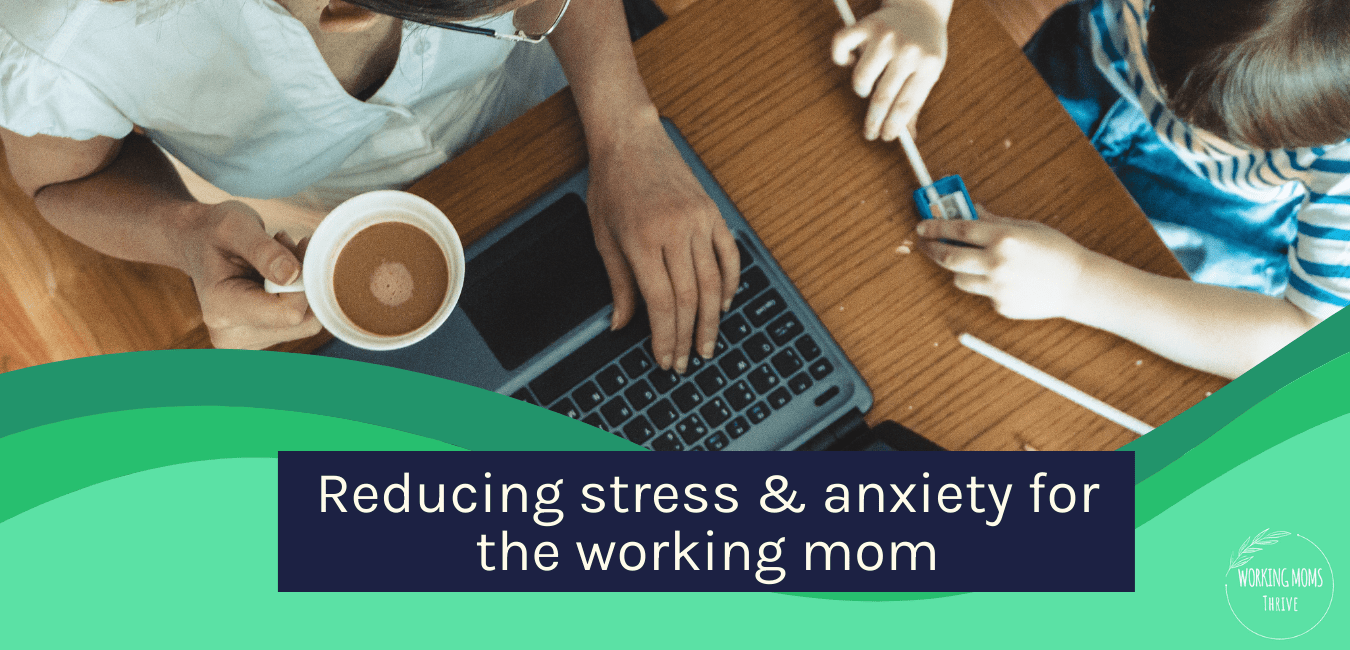
Reducing stress & anxiety in working moms

It’s a Sunday afternoon and I am already thinking of how crazy my week is looking…I have two big workshops, a proposal due, I need to help my 6 year old son with his dinosaur oral, my 4 year is starting to get sick and I definitely need to get ahead of his cold, plus food prep for the week, visiting grandparents, buying a birthday gift and the list goes on.

Stress is real, exhaustion is real and yet I need to show up for my family, my team and most importantly myself.  Now you add on anxiety around Covid-19 (should you send your kids to school or not, should you be going to that get together?), financial stress, unscheduled homework, tantrums, extended family drama and a friend who needs support, it all becomes so overwhelming.

The thing is I really love my job and I love being a mom. Last year, I was so close to burnout trying to get everything right and perfect-my health was declining and it was a big wakeup call that I needed to deal with the stress and not just move it along, hoping it would just fade away. The truth is that you cannot stop the stress BUT you can learn how to cope with it, how to reduce anxiety and depression that can come along with it; and know when to get some professional help when the coping mechanisms are not relieving you of any of the anxiety you are feeling.

Over the years I know when my anxiety peaks when I start feeling overwhelmed, when I feel like I can’t get things done or concentrate on one task, when my body is run down & I start getting sick. These are the first signs. The worst part is when I am not dealing with my stress correctly, it is those closest to me that I snap at, get moody with and receive my bad side. I have found tools that have helped me to keep calm in the crazy moments, pause when I need it and essentially training myself to reset during the day when I start feeling tense, short tempered and irritable.

I have learnt great tools to reduce stress and cope with life’s unpredictability, though at times it is incredibly hard BUT by being consistent and practicing daily I have seen a great change in my mood, my ability to reduce stress, improvements in my relationships and work productivity.

Here are some ideas to reduce stress and anxiety that I have found really helpful (and also based on some research):

  • Deep breathing: as I feel my shoulders tense, my breathing getting shorter when I see my to-do list is getting longer & longer, I now walk away from my workspace and put the kettle on and practice deep breathing. I breathe deeply through my nose and out my mouth; and let my thoughts wander. There are also great apps that you can download to practice breathing during stressful moments or just before you go to bed.
  • Movement: stress, anxiety & depression are deep set feelings that we hold within our body; and we need to work it out. Moderate exercise is a great way of your body producing endorphins which is a natural mood stabilizer. The best thing about exercise is that you can include your kids (it’s a great way of getting energy our, dealing with meltdowns & resetting mood within the house) and have fun with your family. Go walk the dog, run and play at the park, do you yoga and stretching. Find an exercise regimen that works for you.
  • Adapt & re-prioritize: sometimes working on that proposal for work needs to wait because your kid needs you right now. The great thing about plans is that they need to be flexible and we need to learn to adapt. Another part of prioritizing is learning to say no. This is not easy (particularly for those who like to please) but it is important that we can learn to say no to commitments (do you have to go to every kid’s birthday party?)
  • Ask for help: Look at your support structure and identify who is that you trust who help you with the kids, household chores or meals. I am forever grateful to our parents who play an important part in our kids’ lives as well as our domestic worker who keeps my house clean. I know I cannot do everything and it is important.  Part of asking for help is also delegating at work, do you need to do everything can someone on your team take some pressure off of you?
  • Adjust your standards & expectations: This is a big one for me! I needed to reflect why do I have certain standards and expectations and where they were coming from. When setting expectations, it’s important that you’re mindful of your energy level, prior commitments and emotional state. One way to put this into practice is to write down your goals and reassess them each week to see if they are working or if they need to be tweaked.  
  • Build in “me time”: Self-care is so important. We have spent the last month talking about it but really there are so many ways that you can fit it in.
  • Trim the budget: Financial stress is big particularly school fees, paying off a bond, food and petrol prices increasing every month and making sure everyone gets what they need. Having a plan to ease your financial stress is vitally important. Ask tough questions- do you need to have takeout? Do you need that cup of coffee? Being honest about what can you cut out, and determining what is a need versus what is a want is a great way of reducing debt & unnecessary purchases.

Being a working mom is exhausting and now more than-ever are we under much more stress than ever before. By making some changes and tweaks in your daily life, practicing these skills consistently you can not only survive as a working mom, you can thrive, and flourish.

Written by Danielle Moosajie

How do you practically do self-care as a working mom?

How do you practically do self-care as a working mom?

Self-care… just one more thing on our to-do list that seems to slip down the ranks of importance when everything else is screaming for our attention.  We know it’s essential to our mental health, we understand the benefits, but just how do we make the time? Because when going to the toilet alone is a luxury, an entire day away is often just unattainable! I’m not sure I have all the answers, or even that I get this right 100% of the time, but I wanted to share with you a bit about how I make this work practically for me, as a working mom.

Firstly, I have had to adjust my mindset as to what self-care means. It’s not the weekend away or the spa day – although those definitely have a place. I’ve come to see self-care as the small, daily decisions I make to honour my body, mind and emotions and give it what is needs.  For most moms, self-care needs to become a daily priority that typically needs to be broken into small chunks of time if possible. 

It’s about permission giving and starting to see self-care as the thing that gives me capacity to be BOTH the employee I want to be AND the mom I desire to be for my kids.  It’s also what allows me to not loose myself, my identity in the daily grind and helps me rediscover the joy in the many roles I play.  When I am neglecting my self-care I become irritable, exhausted and resentful – and everyone around me know about it.  I learnt early on in my motherhood journey with Post Natal Anxiety, that a little self-care really helped me re-centre and carry on.

Reframing what self-care looks like has meant making sure I regularly schedule my doctors check-ups and “pamper” appointments.  I make sure I get a pedicure as summer starts – there is something about painted toenails that make me feel me and ready to bear my feet!  This also means that I see keeping my hair appointment every 3 months as self-care.  For my sister, self-care has looked like making sure she fits in her monthly nail appointments.  What makes you feel fabulous and cared for?  How can you make sure these things are budgeted for, scheduled and

What does this practically look like?  Here are some ideas to try of how to get 5-15 minutes in your day to do something for you…

  • Make time for a cup of tea in the cool of the morning or as sunsets, and hold it with both hands.  This is often something I try to do on my own, but even with my kids around (often drinking their own cup of tea) I find this ability to connect with nature really helps me get going with the right frame of mind.
  • Set your kids up with an activity and walking away for 5-15 minutes – rest or read 3 pages of your book.  Send those text messages, scroll through social media, listen to a song, finish that cup of tea in silence.  Fostering independent play in my kids has been really helpful in allowing me time to do laundry, clean, cook, work AND to do something for me.
  • If your kids are younger and haven’t started walking, use headphones or ear buds while you walk your kids to the park in a pram, put them in the swing where they are stationary and tune out while you push them.
  • If your kids are older, take them to the park and get them to have races between two points (run, bike, scooter) and say you’ll time them from a distance.  This should give you a few moments on your own.
  • Use TV time at home with your kids to relax and read.  I put each kid in headphones so I have some silence.
  • Set regular breaks for yourself in your workday – work for 25 minutes, give yourself a 5 minute break. Get up, stretch, walk around, make yourself a snack or something to drink.
  • Get kids to help tidy up toys, take dishes to sink and while they are eating, wash the dishes or load dishwasher.  Try not to use all your down time tidying up.
  • Decide what can be let go of, or not done.  Does that load of washing have to be done today, or can you put it off til tomorrow.  Does that project need to be done this month, or can it be pushed out a while? Can you lower your standards and let that one thing slide? Or be delayed so you have some down time?  Not easy questions for a perfectionist like me, but regularly pruning my to-do list and moving things out has really helped me make time to rest.
  • Talk to your partner about distribution of domestic duties.  So many of us pull double duty working all day and then doing the majority of the household chores at night.  If you have a partner, it’s definitely worth opening up a discussion about how to divide these up.  This is so important in letting go of the exhaustion and often the resentment that builds up.  My husband and I regularly talk about how we can divide things up depending on the season we are in.  When I’m home more, I try to do more, but when I’m working more, we renegotiate.  It’s been helpful for my husband to know that I expect him to pack and unpack the dishwasher and take care of the recycling.  I don’t then feel like I have to do it and can take that time to have a break instead.
  • Find time saving meal strategies wherever possible. Again, this often looks different depending on the season we’re in.  I have at times used meal kit services to cut out the time I spend meal planning and shopping and at very busy periods or when we have a baby in the house, I rely a lot on homecooked meal delivery services (my son thought supper was always delivered by “superman” until he was about 4!) Use prechopped veggies to shorten your cooking time etc.  Sometimes these things aren’t in the budget and then it can be helpful to think about freezer meals or month-long meal planning.  Both of these strategies reduce your daily thinking tasks and can be helpful in just giving you a moment to rest.  Can you arrange for someone to look after the kids for a Saturday morning so you can cook a bunch of meals and freeze them?  Can you cook double quantities one week so you have meals for the next?  Can you find 2 hours on a Sunday afternoon to prep a lot of things so you have more time during the week?  You need to find what is going to work best for your family but all of these are things I’ve done at different seasons to help me feel more in control of my time and able to breathe when I need to.

All of this really comes down to figuring out ways to schedule in some time to yourself that is manageable and doable in your daily routine.  And that is going to look different for everyone.  And look different depending on what is going on in your life.  Your self-care journey will have seasons.  It’s not about all or nothing. I hope this offers you some ideas of how to make this work in your own life – and to offer some grace to ourselves when we can’t quite get it right.

The Working Mom Guilt Strikes Again

I am writing this as I sit in quarantine having just moved to a city and country I do not yet know.  The unpacked boxes and suitcases from a house that needs my attention lie all around me and for once my kitchen has no dishes tumbling out of the sink because we’ve eaten take out for 5 days straight.  I am writing this having plugged each of my preschool kids into a screen, simply so I could have some quiet to work.  Some time that wasn’t filled with endless requests for snacks or toys or having to play referee.  As I type I find I’m silently humming the theme tune to Paw Patrol and I barely glance up at my 5 year old son as he comes to show me his latest LEGO creation.  Distracted, I turn to look at my screen and realize I have been holding the space bar too long and have to delete the words “be there on the double” that I accidently started to type.

And then there it is. That invisible grip encircling my chest and squeezing tight, followed by the flood of “shoulds” and “musts”.  I should be paying more attention to my kids; and I must get this written because of the deadline that is approaching. The working mom guilt is real…  And I’m not the only one…

Most working moms, indeed, all moms, have stories to share at the GuiltFest.  It’s an all too cliched problem that is bound up in so much societal truth.  As working moms, we often feel that we are forever falling short.  That we are not doing enough, giving enough, being enough and that we are letting our kids, our jobs, our partners and ourselves down.  Then there is the guilt we feel when we dare actually take time for ourselves, or doing something we love.  This constant act of juggling the multiple balls we have in the air and the mental load of running our household, managing our families, working in or out the home and feeling guilty about it all can be overwhelming and exhausting.  And this is what needs to change.

Because the truth is, I’m doing the best I can and that is good enough.  And we are doing pretty well considering we have turned our lives upside down, moved across 9 time zones and haven’t been able to leave the house in 13 days. My kids do eat vegetables, even if it’s not at every meal.  I typically meal plan and have a good routine, and my kids typically play outside, build something and do art before they get to watch TV. We read stories every night and have family night on Fridays. So maybe it’s okay that today, they have watched 3 hours of TV and ate take out again so I could get some work done.  I choose to give myself grace, and when I can’t, I have a tribe of other working moms who are only a WhatsApp away to offer support. 

Mom guilt has its roots in everything from personal feelings of insecurity, to societal expectations and familial norms and pressures.  And social media doesn’t help.  Just taking a quick scroll through Instagram or Pinterest will leave you doubting you were ever able to measure up.  Yet if we are honest with ourselves, we can often unearth that underneath these feelings of insecurity are fears of inadequacy and even a lack of self-awareness about who we are and what is truly important to us.

I have things that I rock at as a mom, and some things are just not me.  And that’s okay.  I love my job and I’m pretty good at it. I make time for my friends. I enjoy working in an office, having adult time away from my kids, and my new role of working from home with my kids and no external support is one that is going to be an adjustment.  Knowing all of this helps me not become paralysed when the guilt does arise.  This self-awareness is a starting point for leaving the mom guilt behind.

You may not be sitting in a pandemic induced quarantine, having left everything you know behind.  Your kids may not be mindlessly scrolling through YouTube toy reviews and eating cereal as a snack.  But I bet you have felt that mom guilt too – and that you too have struggled to juggle the tasks of a career you love and being the mom you envisioned you’d be.  Because the mom guilt is real, and ever present.  But it doesn’t have to be.  There are things we can do, mindsets we can create and tools we can hone to help us step away from the guilt and move towards and motherhood AND career goals. And that’s what Working Moms Thrive is all about – helping you nurture your mental health, ditch the guilt and balance your expectations so you can thrive!

Won’t you join us on this journey?

Written by Robyn